01
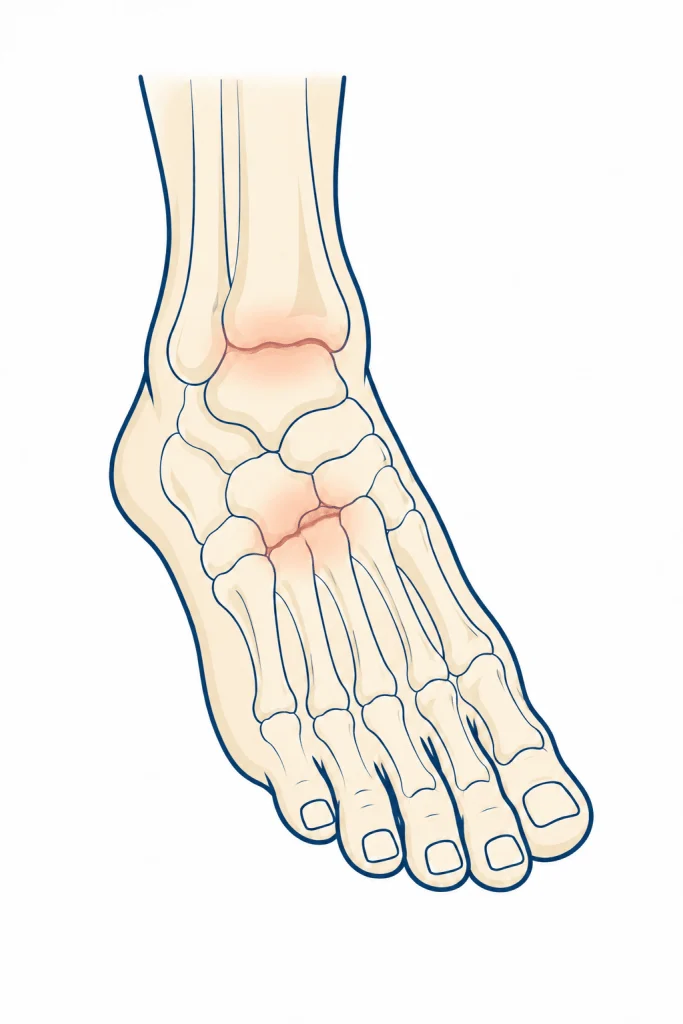
What causes foot and ankle osteoarthritis?
Osteoarthritis develops gradually as the protective cartilage within a joint deteriorates over time. While age is one contributing factor, there are many reasons why arthritis may develop in the foot or ankle.
Common contributing factors include:
– Previous ankle sprains or fractures
– Repetitive wear and tear
– Age-related joint degeneration
– Abnormal foot biomechanics
– Flat feet or high arches
– Previous foot or ankle surgery
– Being overweight
– Family history of osteoarthritis
– Inflammatory joint conditions
– Occupations or sports involving repetitive loading of the feet
Symptoms may include pain during walking, stiffness after periods of rest, swelling around the joint, reduced range of motion and difficulty walking on uneven surfaces.
02
How is foot and ankle osteoarthritis diagnosed?
A thorough assessment by one of our experienced podiatrists is the first step in diagnosing osteoarthritis.
During your appointment we will discuss your symptoms, assess your walking pattern, examine your joints and identify any biomechanical factors contributing to your pain.
In many cases, X-rays are useful to assess the severity of joint degeneration, while ultrasound or other imaging may occasionally be recommended to rule out other causes of pain. If required, your podiatrist can organise referrals for any appropriate imaging.
Because not all foot pain is caused by arthritis, obtaining an accurate diagnosis is essential before commencing treatment.
03
Treatment options
There are many effective treatment options available to help reduce pain, improve mobility and slow the progression of symptoms. Treatment is always tailored to your individual needs and the severity of your condition.
Orthotics
Custom foot orthotics can help redistribute pressure away from painful joints, improve foot mechanics and reduce excessive loading through arthritic areas. They are often an important part of long-term management.
High-Intensity Laser Therapy
For patients with persistent foot or ankle osteoarthritis, our HIRO TT High-Intensity Laser Therapy may be recommended as part of a comprehensive treatment plan.
Available exclusively at our Shellharbour City clinic, the HIRO TT is an advanced therapeutic laser designed to help reduce pain and inflammation while promoting the body’s natural healing response. For some patients, it may provide another non-invasive treatment option before considering more invasive procedures or surgery.
Footwear advice
Supportive footwear plays an important role in reducing stress through arthritic joints. Our podiatrists can recommend footwear that provides appropriate cushioning, stability and support for your individual foot type.
Strengthening and mobility exercises
Targeted exercises help improve joint mobility, maintain muscle strength and support the surrounding structures of the foot and ankle. Our podiatrists develop personalised rehabilitation programs based on your symptoms and goals.
Manual therapy
Joint mobilisation, soft tissue therapy and other manual treatment techniques may be used to improve movement, reduce stiffness and relieve surrounding muscle tension.
Load management
Simple modifications to daily activities, exercise routines and occupational demands can significantly reduce irritation of arthritic joints while helping you remain active.
Injection therapy
Where appropriate, we may work alongside your GP or specialist to discuss treatment options such as corticosteroid injections, platelet-rich plasma (PRP) or other injection therapies as part of your overall management plan.
Surgery
While many patients respond well to conservative treatment, surgery may occasionally be recommended for severe arthritis that significantly limits quality of life. Our goal is always to explore appropriate non-surgical options first while ensuring timely referral to an orthopaedic specialist when required.